
+44 (0)1440 564988
An article by Joe Saunders
May 1926 holds an important anniversary in British history, the 1926 General Strike. A general strike was a stoppage of all labour, or at least across most industries, which during Britain’s industrial heyday was a serious form of protest. General strikes were undertaken across the world in the twentieth century at ‘high points of class struggle’ such as St Petersburg in 1904, Vancouver and Belfast in 1919 and France in 1936.[1]
The 1926 General strike is the most prominent such event in British history. It began with the locking out of work of over a million miners by mine owners who were attempting to force them to accept longer hours and lower pay. On 3 May the Trade Union Congress (TUC) in response called for the withdrawal of labour in the transport, electricity, gas, docks, heavy chemicals, building and printing industries in solidarity with the miners. As a result, almost two million additional workers downed tools.[2] There was significant disruption across the country, though the government had been prepared and put in place measured to limit the impact, such as calling the upper and middle classes to voluntarily undertake the work of strikers. The strike ran on until 12 May when the TUC formally announced its end, though no guarantees or agreements had been met and in fact many workers refused to believe the strike had been called off.
The TUC asked the Conservative government to ensure that all striking workers would remain employed, but the government stated that it had no power to do so. Many of the strikers returned to their jobs, though the most militant found themselves unemployed. The climbdown by the TUC with no agreement was seen by many as a failure. The leader of the miners A. J. Cook wrote how it was a ‘complete surrender’ and in fact was an ‘ultimatum to us miners, bidding us surrender too’.[3] The miners continued their strike for seven more months before growing poverty forced their own surrender.
The impact of the strike was significant. There had been growing fears in Britain of radical unrest and in the years leading up to 1926 that had been a series of national and local strikes. The defeat of the General Strike however heralded a greater confidence by conservative politicians and by employers to restrict pay and conditions in the face of a weakened labour movement. Trade unionism shifted away from militancy toward a more conciliatory strategy, including growing focus on supporting the Labour Party and winning parliamentary power.[4]
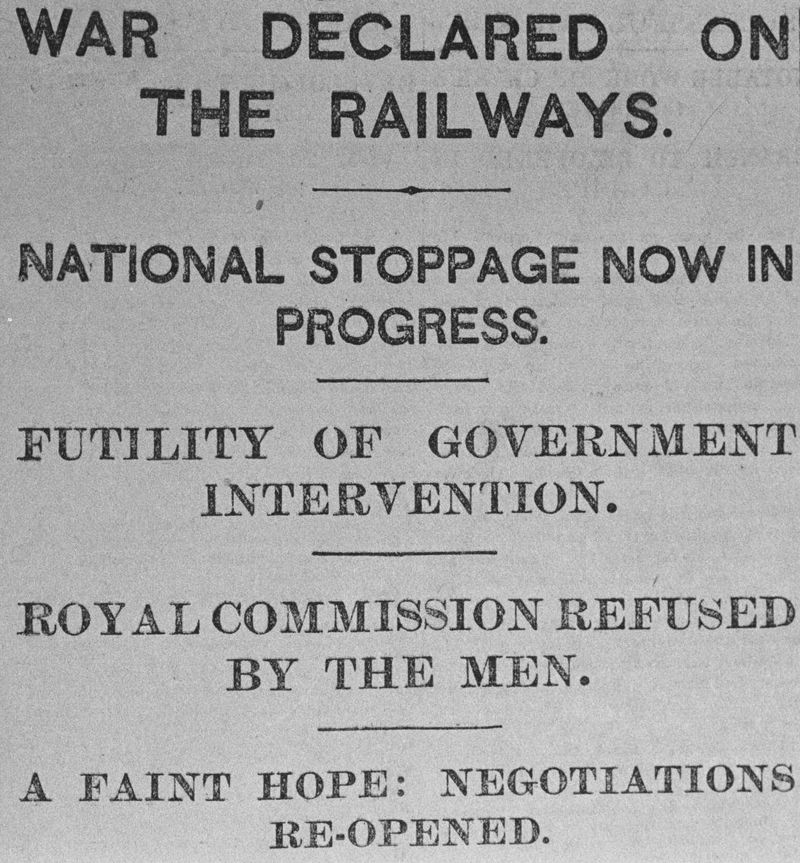
The General Strike of 1926 was a pivotal moment but it cannot be separated from its context which includes considering the wider social, economic and political situation of the 1920s, a febrile and uncertain time. The Strike also sits within a long tradition of industrial action, including the memories of 1926 being carried into subsequent labour disputes and the trade union movement. It must also be seen within its own historical context which included earlier strikes, such as Black Friday in 1921. Even further back were a range of industrial and agricultural protests including the Luddites, Swing Rioters and the 1826 Weavers Uprising which marks its bi-centenary this year.[5] Understanding these kinds of events can be fascinating for their relation to our particular family and local histories but learning about these points of friction can also provide great viewpoints into the wider world of work and politics of the time.
To learn more about the 1926 General Strike take a look at the General Strike 100 project which brings together stories, exhibitions, and events to remember the strike and its impact on working people, https://generalstrike100.com/.
A new book on the Strike has been released to coincide with the anniversary; Jonathan Schneer, Nine Days in May: The General Strike of 1926 (2026).
Sources:
[1] Shirin Hirsch, ‘1926 General Strike’, https://phm.org.uk/blogposts/1926-general-strike/.
[2] Shirin Hirsch, ‘1926 General Strike’.
[3] Quoted in Shirin Hirsch, ‘1926 General Strike’.
[4] J, Graham Jones, ‘Ernest Bevin and the General Strike’, Llafur: Journal of Welsh Labour History/Cylchgrawn Hanes Llafur Cymru, 8: 2 (2001), 97-103.
[5] Weavers Uprising 1826 Project, https://www.weavers-uprising.org.uk/.